Revealing Ties Between Slot Machine Random Generators and Pace Breakdowns in Horse Racing
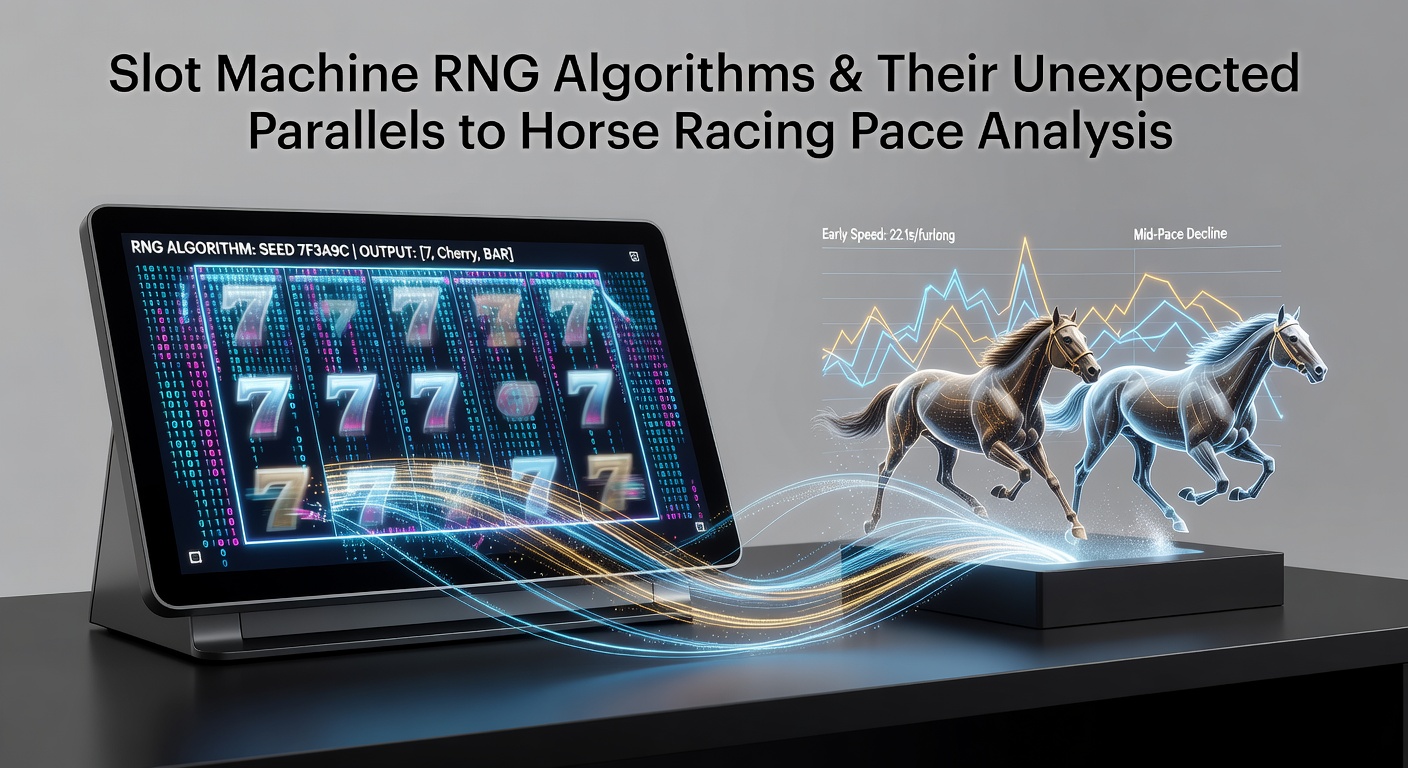 Slot machine operations depend on pseudorandom number generators that produce outcomes through mathematical sequences updated thousands of times per second, and these systems ensure each spin remains independent while adhering to programmed return-to-player percentages over extended play periods. Certification laboratories test these generators against statistical benchmarks that confirm uniformity and unpredictability across millions of simulated results, which creates a foundation for regulated fairness in electronic gaming devices. Horse racing pace analysis breaks races into sectional timings measured at fixed intervals along the track, allowing observers to map how early speed, mid-race adjustments, and finishing surges combine to shape overall performance. Data collection from timing equipment and video review produces detailed profiles that reveal patterns in energy distribution among competitors, and these profiles help identify horses whose running styles suit particular track configurations or distances. Both fields apply layered probabilistic frameworks where initial conditions generate varied outputs that still follow predictable aggregate behaviors. In slots the seed value initiates a deterministic chain of calculations that appears random to players, while pace metrics in racing start from measured split times that feed into models forecasting later race segments. Researchers have examined how variance in one system mirrors fluctuations in the other, noting that short-term deviations from expected averages occur routinely yet balance toward long-term norms. Regulatory frameworks in multiple jurisdictions require RNG audits at regular intervals to maintain compliance standards, and similar data scrutiny appears in racing jurisdictions where stewards and analysts review sectional data for integrity purposes. The Nevada Gaming Control Board publishes guidelines on testing procedures that emphasize entropy sources and output validation, whereas organizations focused on thoroughbred performance maintain databases of sectional records that support comparable verification processes. Parallel structures emerge when analysts model clustering effects. Slot sequences can produce streaks of high or low paying symbols within controlled parameters, and race pace data sometimes shows groups of runners adopting similar early tempos that alter later dynamics. Studies from academic sources on stochastic processes indicate these groupings arise naturally from underlying distribution rules rather than external manipulation, which provides a shared analytical lens across seemingly distinct domains. Further examination highlights how volatility measures function in each setting. High-volatility slots deliver infrequent but larger returns distributed according to internal weighting, and this structure finds an echo in races where certain horses display burst-speed profiles that yield occasional dominant performances amid steadier rivals. Those who compile extensive datasets notice that both domains reward careful modeling of tail-end probabilities, where rare events exert disproportionate influence on overall expectations.
 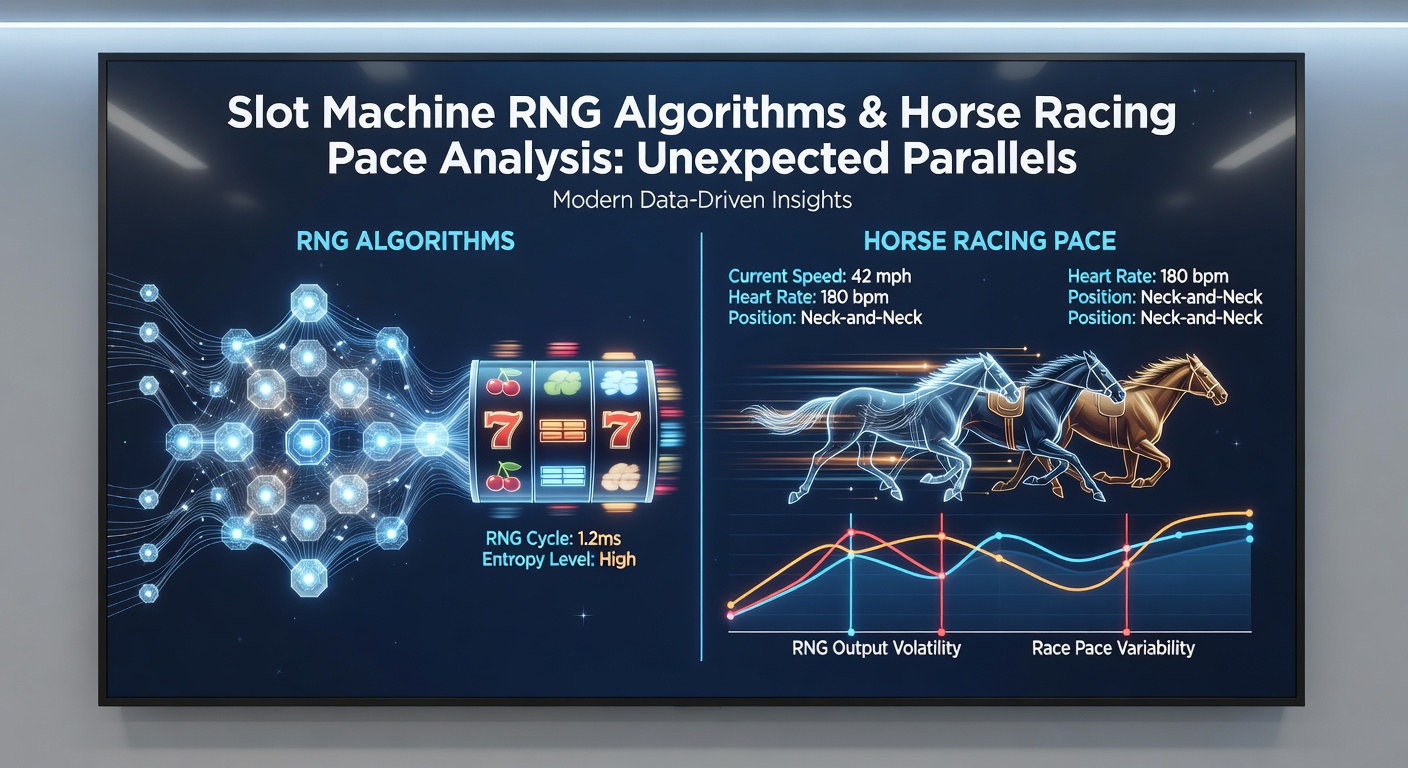 Implementation of real-time data feeds has accelerated in both industries since the mid-2020s. Electronic timing systems at major tracks now deliver sectional updates within seconds of each segment, enabling rapid recalculation of projected outcomes, while slot platforms incorporate live monitoring tools that track generator performance against theoretical benchmarks. Industry reports from bodies such as the European Gaming and Betting Association document these technological alignments and note their role in supporting transparent operations across regions. Comparative research continues to explore shared mathematical tools such as Markov chains and Monte Carlo simulations. Practitioners in gaming technology apply these methods to forecast long-run behavior of RNG outputs, and racing analysts deploy similar techniques when projecting field-wide pace scenarios from historical sectional samples. The overlap allows cross-domain insights where adjustments to one model can inform refinements in the other without requiring identical physical contexts. Data integrity remains central to both practices. Independent testing houses verify that RNG implementations resist prediction or bias introduction, and parallel safeguards in racing involve multiple camera angles plus electronic sensors to confirm timing accuracy. Reports issued by the Australian Racing Integrity Board illustrate how such layered verification reduces discrepancies and supports consistent analytical outputs over successive events. Observers note that training programs for analysts increasingly incorporate modules covering both randomization theory and performance segmentation, recognizing that proficiency in one area transfers usefully to the other. Professional development resources from international gaming associations highlight case examples where professionals moved between electronic gaming oversight and racing data teams, carrying forward expertise in distribution analysis and outlier detection. Conclusion
The connections between slot machine RNG algorithms and horse racing pace analysis rest on shared principles of probabilistic modeling, statistical validation, and pattern recognition within constrained systems. Regulatory documentation, academic examinations, and operational records across jurisdictions demonstrate these overlaps through concrete testing protocols and data structures rather than surface similarities alone. Continued refinement of measurement tools and analytical methods sustains these parallels as both sectors evolve their approaches to handling chance and performance metrics.
Implementation of real-time data feeds has accelerated in both industries since the mid-2020s. Electronic timing systems at major tracks now deliver sectional updates within seconds of each segment, enabling rapid recalculation of projected outcomes, while slot platforms incorporate live monitoring tools that track generator performance against theoretical benchmarks. Industry reports from bodies such as the European Gaming and Betting Association document these technological alignments and note their role in supporting transparent operations across regions. Comparative research continues to explore shared mathematical tools such as Markov chains and Monte Carlo simulations. Practitioners in gaming technology apply these methods to forecast long-run behavior of RNG outputs, and racing analysts deploy similar techniques when projecting field-wide pace scenarios from historical sectional samples. The overlap allows cross-domain insights where adjustments to one model can inform refinements in the other without requiring identical physical contexts. Data integrity remains central to both practices. Independent testing houses verify that RNG implementations resist prediction or bias introduction, and parallel safeguards in racing involve multiple camera angles plus electronic sensors to confirm timing accuracy. Reports issued by the Australian Racing Integrity Board illustrate how such layered verification reduces discrepancies and supports consistent analytical outputs over successive events. Observers note that training programs for analysts increasingly incorporate modules covering both randomization theory and performance segmentation, recognizing that proficiency in one area transfers usefully to the other. Professional development resources from international gaming associations highlight case examples where professionals moved between electronic gaming oversight and racing data teams, carrying forward expertise in distribution analysis and outlier detection. Conclusion
The connections between slot machine RNG algorithms and horse racing pace analysis rest on shared principles of probabilistic modeling, statistical validation, and pattern recognition within constrained systems. Regulatory documentation, academic examinations, and operational records across jurisdictions demonstrate these overlaps through concrete testing protocols and data structures rather than surface similarities alone. Continued refinement of measurement tools and analytical methods sustains these parallels as both sectors evolve their approaches to handling chance and performance metrics.
Slot machine operations depend on pseudorandom number generators that produce outcomes through mathematical sequences updated thousands of times per second, and these systems ensure each spin remains independent while adhering to programmed return-to-player percentages over extended play periods. Certification laboratories test these generators against statistical benchmarks that confirm uniformity and unpredictability across millions of simulated results, which creates a foundation for regulated fairness in electronic gaming devices. Horse racing pace analysis breaks races into sectional timings measured at fixed intervals along the track, allowing observers to map how early speed, mid-race adjustments, and finishing surges combine to shape overall performance. Data collection from timing equipment and video review produces detailed profiles that reveal patterns in energy distribution among competitors, and these profiles help identify horses whose running styles suit particular track configurations or distances. Both fields apply layered probabilistic frameworks where initial conditions generate varied outputs that still follow predictable aggregate behaviors. In slots the seed value initiates a deterministic chain of calculations that appears random to players, while pace metrics in racing start from measured split times that feed into models forecasting later race segments. Researchers have examined how variance in one system mirrors fluctuations in the other, noting that short-term deviations from expected averages occur routinely yet balance toward long-term norms. Regulatory frameworks in multiple jurisdictions require RNG audits at regular intervals to maintain compliance standards, and similar data scrutiny appears in racing jurisdictions where stewards and analysts review sectional data for integrity purposes. The Nevada Gaming Control Board publishes guidelines on testing procedures that emphasize entropy sources and output validation, whereas organizations focused on thoroughbred performance maintain databases of sectional records that support comparable verification processes. Parallel structures emerge when analysts model clustering effects. Slot sequences can produce streaks of high or low paying symbols within controlled parameters, and race pace data sometimes shows groups of runners adopting similar early tempos that alter later dynamics. Studies from academic sources on stochastic processes indicate these groupings arise naturally from underlying distribution rules rather than external manipulation, which provides a shared analytical lens across seemingly distinct domains. Further examination highlights how volatility measures function in each setting. High-volatility slots deliver infrequent but larger returns distributed according to internal weighting, and this structure finds an echo in races where certain horses display burst-speed profiles that yield occasional dominant performances amid steadier rivals. Those who compile extensive datasets notice that both domains reward careful modeling of tail-end probabilities, where rare events exert disproportionate influence on overall expectations.
Implementation of real-time data feeds has accelerated in both industries since the mid-2020s. Electronic timing systems at major tracks now deliver sectional updates within seconds of each segment, enabling rapid recalculation of projected outcomes, while slot platforms incorporate live monitoring tools that track generator performance against theoretical benchmarks. Industry reports from bodies such as the European Gaming and Betting Association document these technological alignments and note their role in supporting transparent operations across regions. Comparative research continues to explore shared mathematical tools such as Markov chains and Monte Carlo simulations. Practitioners in gaming technology apply these methods to forecast long-run behavior of RNG outputs, and racing analysts deploy similar techniques when projecting field-wide pace scenarios from historical sectional samples. The overlap allows cross-domain insights where adjustments to one model can inform refinements in the other without requiring identical physical contexts. Data integrity remains central to both practices. Independent testing houses verify that RNG implementations resist prediction or bias introduction, and parallel safeguards in racing involve multiple camera angles plus electronic sensors to confirm timing accuracy. Reports issued by the Australian Racing Integrity Board illustrate how such layered verification reduces discrepancies and supports consistent analytical outputs over successive events. Observers note that training programs for analysts increasingly incorporate modules covering both randomization theory and performance segmentation, recognizing that proficiency in one area transfers usefully to the other. Professional development resources from international gaming associations highlight case examples where professionals moved between electronic gaming oversight and racing data teams, carrying forward expertise in distribution analysis and outlier detection. Conclusion
The connections between slot machine RNG algorithms and horse racing pace analysis rest on shared principles of probabilistic modeling, statistical validation, and pattern recognition within constrained systems. Regulatory documentation, academic examinations, and operational records across jurisdictions demonstrate these overlaps through concrete testing protocols and data structures rather than surface similarities alone. Continued refinement of measurement tools and analytical methods sustains these parallels as both sectors evolve their approaches to handling chance and performance metrics.