Seasonal Variations Transform Reward Structures in Virtual Casino Environments and International Horse Racing Circuits
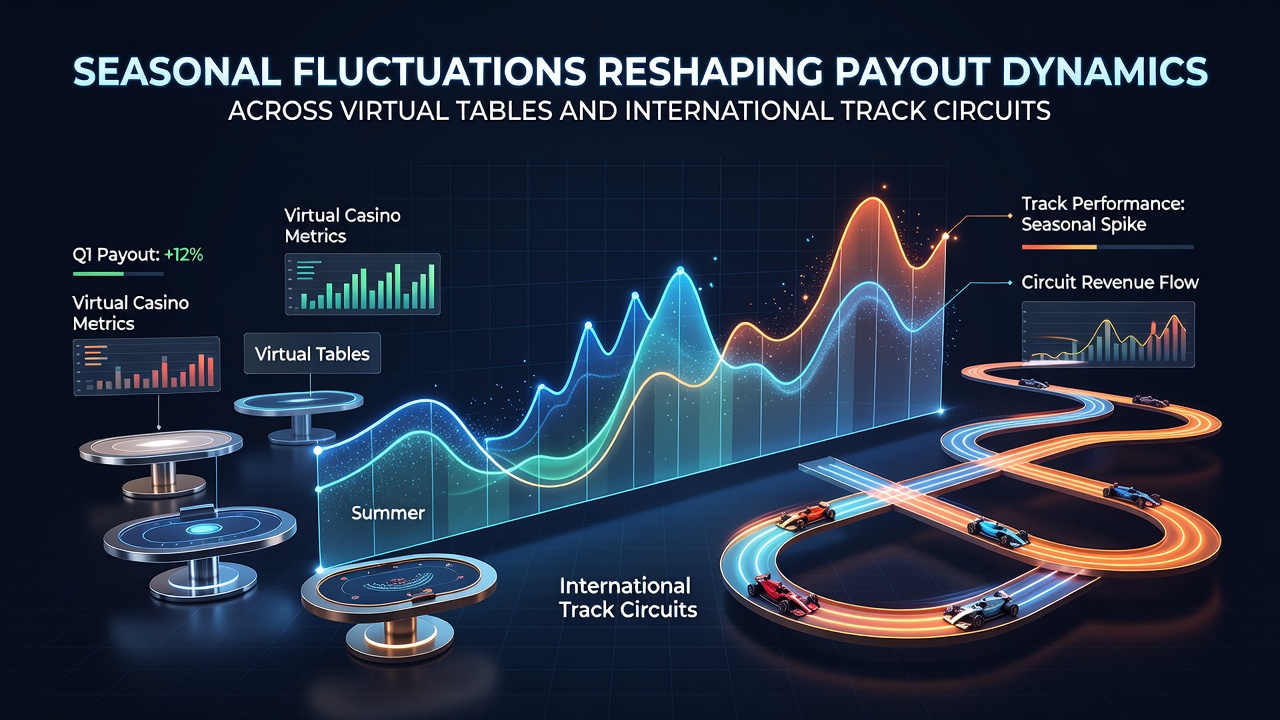
Seasonal shifts create measurable differences in how payouts distribute across online card tables and racetracks around the world, with data from multiple jurisdictions showing clear patterns tied to weather cycles, holiday calendars, and event schedules that run through 2026. Operators track these movements because they alter bet volumes, odds calculations, and final settlement amounts in predictable ways, while players encounter adjusted return rates that reflect the underlying conditions rather than random chance.
Weather Cycles and Their Direct Effects on Track Outcomes
International racing circuits experience pronounced payout changes when weather patterns shift from one season to the next, since track surfaces, horse performance, and field sizes respond immediately to temperature and precipitation levels. Summer circuits in Europe and North America typically produce firmer ground that favors speed-oriented runners, which compresses winning margins and reduces the frequency of long-priced results compared with softer winter conditions that generate larger payouts on upsets. Data collected by the International Federation of Horseracing Authorities indicates that average dividend sizes on turf tracks rise 12 to 18 percent during wetter months because fewer favorites prevail when conditions become testing.
June 2026 brings the Northern Hemisphere into peak summer racing, where meetings in Australia and South Africa operate under opposite seasonal influences, creating simultaneous contrasts in global payout flows. Those who follow multiple jurisdictions observe that bookmakers adjust morning line odds and live odds feeds to account for these surface variables, which in turn influences the overall money returned to bettors across different circuits.
Digital Table Dynamics During Calendar Transitions
Virtual gaming platforms register corresponding adjustments in payout behavior as player activity migrates with seasons and holidays. Increased participation during winter months in temperate regions correlates with higher volumes on table games, which statistical models show leads to slightly elevated aggregate return percentages because larger sample sizes allow game mathematics to play out more consistently. Summer periods, by contrast, often see reduced session lengths and more recreational play, producing payout distributions that exhibit greater short-term variance even though the underlying house edges remain fixed.
Research compiled by the University of Nevada Gaming Innovation Center demonstrates that these seasonal participation swings affect jackpot contribution rates and bonus trigger frequencies across roulette and blackjack variants, with measurable differences appearing between the first and third quarters of each year. Operators respond by recalibrating promotional structures to maintain engagement levels without altering core game parameters.
Combined Influences Across Regions and Formats
Cross-border operators who manage both virtual tables and international track feeds must reconcile these overlapping seasonal signals when setting risk parameters and liquidity reserves. A single firm handling European winter racing alongside North American summer festivals encounters payout peaks that do not align neatly, requiring sophisticated hedging that draws on historical datasets spanning multiple years. The Australian Institute of Criminology has documented similar coordination challenges in its reviews of multi-jurisdictional wagering markets, noting that seasonal misalignment contributes to temporary imbalances in settlement timing between digital and physical products.
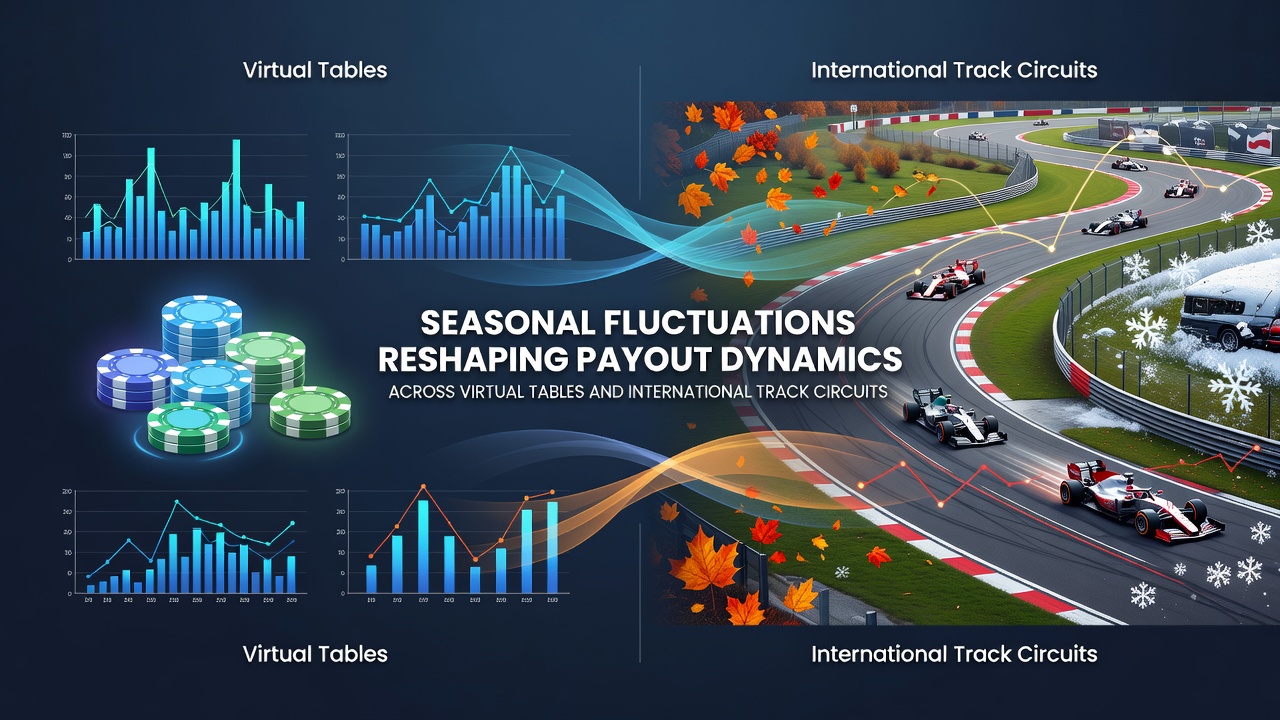
Those monitoring June 2026 activity will see these patterns repeat as major festivals coincide with school holidays and vacation periods, concentrating betting action into compressed windows that amplify both volume spikes and subsequent payout clusters. Regulators in several markets require operators to report these seasonal variances as part of routine compliance filings, which allows oversight bodies to verify that settlement processes remain stable despite the external pressures.
Long-Term Data Patterns and Adjustment Mechanisms
Longitudinal studies reveal that payout dynamics settle into repeating annual cycles once sufficient data accumulates, allowing predictive models to anticipate the size and timing of return fluctuations with increasing accuracy. Tracks and platforms that maintain consistent record-keeping over five or more seasons develop internal benchmarks that guide staffing, server capacity, and reserve allocations well in advance of each new cycle. Industry reports from the North American Association of State and Provincial Lotteries show that these forecasting methods have reduced settlement delays during high-variance periods by measurable margins.
Yet the underlying mathematics of each game or race remains unchanged, which means the seasonal effects operate entirely through volume, field composition, and participation timing rather than any alteration to game rules. Observers note that successful adaptation depends on recognizing these external drivers early and applying consistent adjustments rather than attempting to override them.
Conclusion
Seasonal fluctuations continue to reshape payout distributions across virtual tables and international track circuits through well-documented mechanisms tied to weather, calendars, and participation patterns. Data from racing federations, academic research centers, and regulatory filings confirm that these shifts follow repeatable cycles that operators and analysts track to maintain stable operations. As June 2026 progresses, the same seasonal variables will generate the next round of observable changes in return dynamics, providing fresh data points that reinforce existing models without introducing new variables into the core equations.