Real-Time Analytics Driving In-Play Strategies Across Horse Racing and Soccer Markets
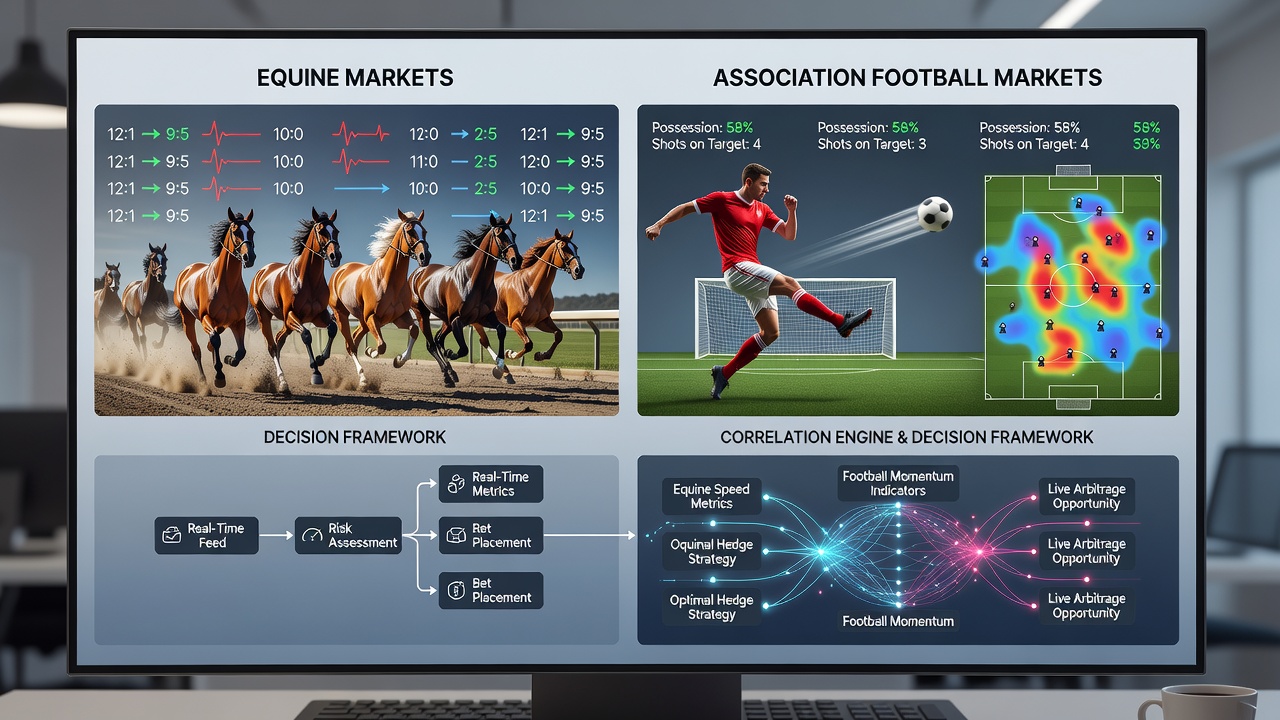
Operators and analysts integrate live data streams from multiple sensors into structured decision systems that guide in-play wagers on equine events and association football contests, and these frameworks process inputs such as positional tracking, biometric readings, and environmental variables to adjust probabilities continuously during events.
Data Sources Fueling Equine In-Play Models
Horse racing venues deploy GPS-enabled saddle cloths alongside heart-rate monitors and stride-length sensors that transmit updates every fraction of a second, while researchers at institutions including the University of Melbourne have documented how these feeds correlate with finish-time projections once the race begins. Observers note that trainers and syndicates feed the same streams into proprietary algorithms that recalculate expected margins after each furlong, and data from Australian racing authorities shows average update intervals shortened to under 200 milliseconds by mid-2026. Those who build decision frameworks combine the incoming metrics with historical pace profiles to generate revised odds that reflect current positioning and fatigue indicators, and the resulting outputs allow automated systems to place or adjust wagers before the next marker is reached.
Soccer Tracking Systems and Live Probability Adjustments
Association football matches rely on optical tracking cameras plus wearable devices that capture player acceleration, passing networks, and ball-recovery rates, and leagues across Europe and North America have standardized these feeds since the early 2020s. Decision frameworks map the incoming variables onto pre-match baselines so that expected-goal models update after every possession sequence, while a July 2026 report from the Canadian Gaming Association highlighted a 14 percent increase in the volume of in-play soccer transactions processed through such correlated systems. Analysts incorporate variables such as team pressing intensity and goalkeeper positioning into layered scoring engines, and the outputs feed directly into order-management platforms that execute or hedge positions within seconds of each trigger event.
Correlation Techniques That Link Streams to Actions
Engineers apply time-series alignment methods to synchronize equine and football data streams that arrive at different frequencies, and they then run multivariate regression or gradient-boosted trees to identify which combinations of inputs most reliably shift outcome probabilities. One study published by the Nevada Center for Gaming Research demonstrated that models incorporating both speed-decay curves from horses and pressing-efficiency metrics from soccer achieved higher calibration scores than single-sport baselines, and practitioners embed these calibrated outputs inside risk-management layers that enforce position-size limits. The frameworks also apply anomaly detection to flag sensor drift or venue-specific noise, and operators test the same pipelines against historical event logs to verify stability before live deployment.
Framework Architecture and Execution Layers
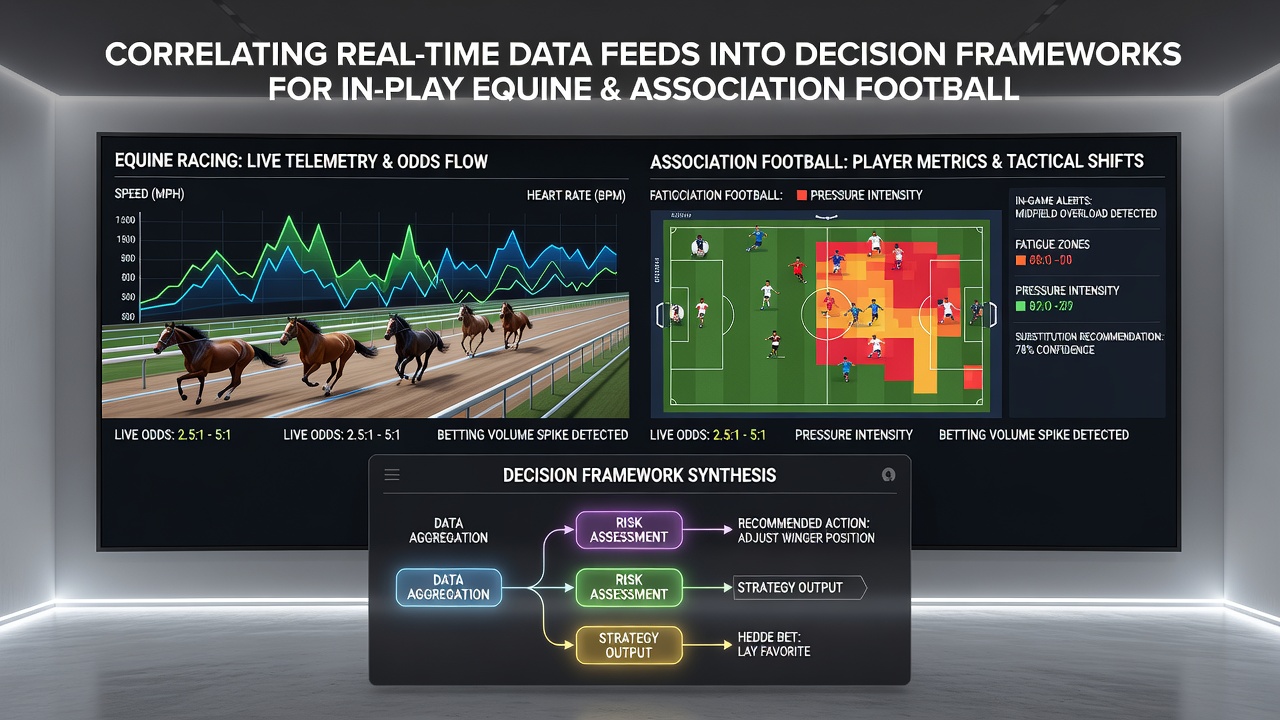
Modern systems separate ingestion, correlation, and execution into distinct micro-services so that latency remains below 150 milliseconds from sensor capture to order submission, and cloud providers supply the elastic compute required during peak race or match windows. Decision rules are expressed as conditional logic trees that reference both absolute thresholds and relative changes across multiple variables, while compliance modules log every automated action for later audit. Teams that maintain these architectures run nightly back-tests against anonymized event data supplied by track operators and league partners, and the results inform parameter adjustments that keep the models aligned with evolving competition patterns.
Regulatory Context and Technical Standards
Authorities in several jurisdictions now require operators to document the data lineage and model governance procedures used for in-play products, and the International Association of Gaming Regulators issued updated technical standards in early 2026 that address real-time feed integrity. These guidelines emphasize encryption of biometric streams and independent verification of correlation algorithms, and they encourage the adoption of open data formats that allow third-party audits. Operators that meet the standards gain expedited approval for new market offerings, and several European and Asian regulators have begun accepting mutual recognition of such certifications.
Conclusion
Integration of real-time data feeds into decision frameworks continues to reshape how in-play markets operate for both equine and association football events, with correlation engines providing the bridge between raw sensor outputs and executable trading decisions. Continued refinement of alignment techniques and governance protocols supports the expansion of these systems while meeting regulatory expectations across multiple regions.