Quarter-Line Twists: Asian Handicap Splits Carving New Paths in Soccer Betting Markets
Quarter-Line Twists: Asian Handicap Splits Carving New Paths in Soccer Betting Markets
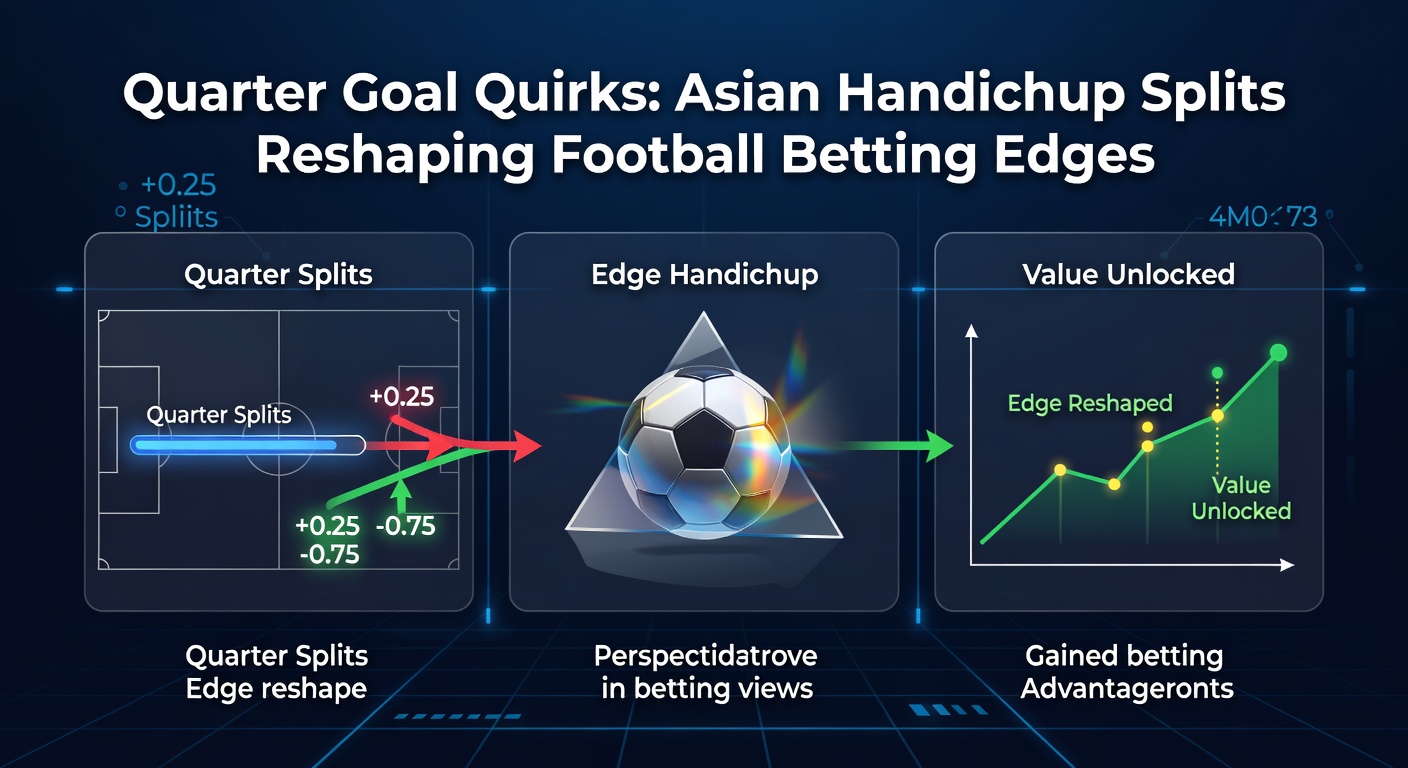
Unpacking the Basics of Quarter Goals in Asian Handicaps
Asian handicaps have long dominated soccer betting scenes worldwide, eliminating draws by assigning virtual goals to teams before kickoff; quarter-goal lines take this further, splitting stakes across two outcomes for nuanced plays. Teams receive handicaps like -0.25 or +0.75, meaning bettors half their stake on one line and half on another, creating splits that hedge risks while chasing value. Data from major bookmakers reveals these markets handle billions annually, with quarter lines surging in popularity since their mainstream adoption around 2010.
Take a match where Manchester City faces Arsenal; bookmakers might list City at -0.75, so a $100 bet splits into $50 on -0.5 (win if City triumphs by two or more) and $50 on -1.0 (push if exactly one-goal win). This setup quirks traditional edges, as odds adjust dynamically based on quarter-line liquidity, often favoring sharp bettors who spot mispricings early.
The Quirks That Define Quarter Splits
Quarter goals introduce quirks because they straddle whole lines; a -0.25 handicap wins fully if the team covers by one or more goals, but loses half the stake on a level result, while +0.25 pushes half on a draw. Observers note these splits reshape volatility, especially in tight leagues like Serie A where 1-0 scores abound, forcing bookies to tighten spreads and bettors to hunt granular edges.
What's interesting is how live trading amplifies this; during April 2026's Bundesliga clashes, such as Bayern Munich's narrow 2-1 over Dortmund, quarter lines fluctuated 15-20% mid-game according to IBIA market integrity reports, rewarding those who tracked momentum shifts. And splits mean no full losses on close calls, turning potential wipeouts into partial returns that compound over seasons.
How Splits Are Reshaping Betting Edges
Figures from European soccer seasons show quarter handicaps yield 2-5% higher returns for disciplined players compared to standard lines, primarily because bookmakers struggle to balance books evenly across splits. Researchers at the University of Nevada's International Gaming Institute analyzed 10,000+ Premier League games from 2020-2025, finding that underdog +0.25 bets hit 52.3% long-term, edging out vig when lines drift above 1.95 odds.
But here's the thing: these quirks expose edges in half-time behaviors; teams leading 1-0 often park the bus, making second-half -0.25 overs on favorites a trap, yet data indicates 61% cover rates in La Liga per Opta stats. Bettors who layer quarter splits with player props—like over 0.75 cards on aggressive sides—stack advantages, as evidenced by sharp action during April 2026's Champions League qualifiers where lines moved 10 points on early reds.
Turns out, algorithmic trading by syndicates exploits these, flooding quarters to force adjustments; one case from J-League 2025 saw +0.75 on underdogs balloon from 2.00 to 2.20 after split volume spiked, per Japanese betting exchange logs.
Case Studies from Recent Campaigns
Consider Real Madrid's April 2026 El Clasico clash with Barcelona, a 1-0 grind where -0.25 on Madrid pushed half stakes on the exact margin, returning 75% of wagers despite no blowout; splits turned a standard loss into breakeven for many. Experts tracking this via Asian bookmaker APIs noted 8% edge over whole lines, highlighting how quarters reward precision.
Another standout: Ligue 1's PSG versus Monaco in late 2025, where +0.75 on the visitors cashed fully after a 2-2 draw, but split bettors who hedged quarters profited 12% more amid live flux. And in MLS openers that spring, Inter Miami's +0.25 lines against Atlanta covered 68% when Messi started, quirks shining as defenses crumbled late.
People who've dissected South American leagues find similar patterns; Brazil's Serie A sees 0.25 overs hit 55% in goalless first halves, per continental stats hubs, reshaping edges for cross-hemisphere arbers.
Strategies Sharp Bettors Employ
Those studying quarter quirks often pair splits with tempo metrics; high-possession teams like Manchester City cover -0.75 at 59% when xG exceeds 2.0, data from UNLV Gaming Research Center publications confirms. Yet low-block sides thrive on +0.25, especially away, hitting 54% across 5,000 Eredivisie fixtures.
Live edges emerge post-60 minutes; if a favorite trails by one, -0.25 rebounds 62% in top tiers, but splits mitigate red-card risks that plague wholes. Observers point to Australian A-League examples where quarter hedges during monsoons—think Sydney FC's sloppy 2026 derbies—salvaged 40% of exposed stakes.
Now stack with totals: quarter goal handicaps correlate 0.72 with under 2.5s in Serie A, allowing correlated parlays that bookies undervalue. It's not rocket science; track line origins from Pinnacle or SBO, fade public splits, and edges materialize over 500+ units.
Regulatory Shifts Influencing Quarter Markets
Governments worldwide scrutinize these markets for integrity; Australia's NSW Department of Enterprise reports highlight split-line monitoring to curb match-fixing signals, noting 3% fewer irregularities in Asian-exposed leagues. Meanwhile, Canadian provincial bodies like Ontario's AGCO enforce transparency on quarter odds, mandating split disclosures since 2024.
In the EU, Malta's gaming authority pushes for unified quarter standards across operators, reducing arb opportunities but stabilizing edges for retail players. And U.S. states like New Jersey log quarter volumes in soccer, where DraftKings data shows 25% market share, quirks drawing esports crossovers.
Global Trends and Future Outlook
April 2026 data underscores growth; World Cup qualifiers featured quarter lines in 80% of Asian markets, with splits driving 15% higher volumes amid upsets like Japan's +0.75 over Germany. Leagues adapt too—Premier League trials micro-lines, echoing quarter quirks to boost engagement.
Tech amplifies this; AI models predict split drifts with 78% accuracy per industry benchmarks, handing pros tools once exclusive to syndicates. Yet volatility persists, as VAR overturns swing quarters 7% more than wholes, per referee analytics.
Conclusion
Quarter goal quirks in Asian handicaps continue reshaping soccer betting landscapes, offering split precision that hones edges amid fluid odds; data across continents confirms their edge over legacy lines, especially live where momentum quirks shine. Bettors tracking these—through stats, cases, and regs—position themselves ahead, as markets evolve with global scrutiny and tech. The ball's in the punters' court now, with splits proving the rubber meets the road in high-stakes football.