Mapping Algorithmic Advantages in Live Casino Betting and Multi-Bet Accumulators
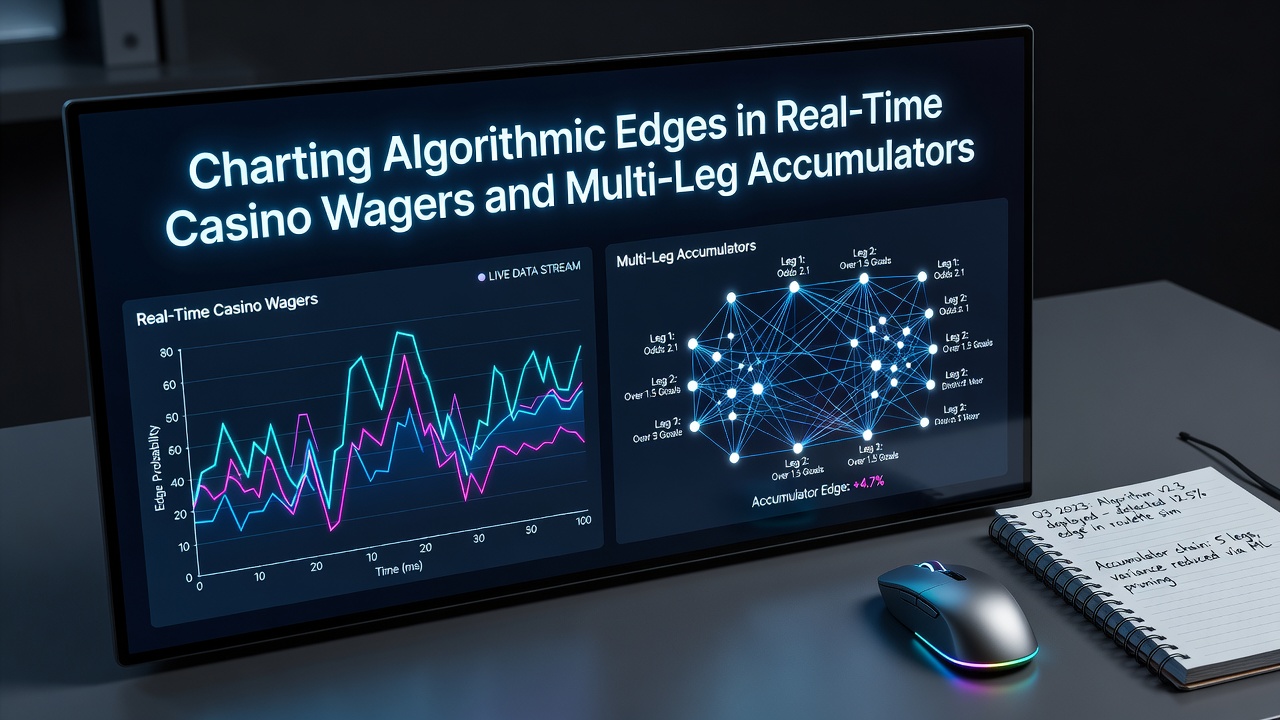
Algorithmic tools now track probability shifts across live casino tables and multi-leg accumulator builds, where real-time inputs from card shoes, wheel spins, and player metrics feed directly into decision frameworks used by betting operators and analysts alike. These systems process streams of data during ongoing rounds, allowing adjustments in wager sizing or leg selection before outcomes resolve. Observers note that such methods draw from statistical models refined over multiple cycles, with applications expanding as processing speeds increase through August 2026.
Real-Time Inputs in Casino Environments
Live casino wagers rely on continuous feeds from physical or virtual tables, where algorithms monitor variables such as remaining deck composition in blackjack or ball trajectory patterns in roulette. Data indicates these models calculate updated probabilities mid-round, factoring in dealer position and prior outcomes without requiring manual recalculations. Those who study gaming systems report that integration of sensor arrays and optical recognition has reduced latency to under two seconds in many platforms, enabling edges that shift based on momentary conditions rather than static odds alone.
Researchers have documented cases where pattern recognition identifies temporary deviations in wheel bias or card distribution, prompting automated alerts for adjusted stake levels. This approach connects directly to accumulator construction because live casino results sometimes serve as individual legs in broader multi-bet structures, linking table outcomes to sports events in hybrid products offered by select operators.
Building Multi-Leg Accumulators with Data Layers
Multi-leg accumulators combine outcomes across separate events, and algorithmic charting applies correlation matrices to assess joint probabilities rather than treating each leg independently. Evidence suggests software platforms now evaluate historical datasets alongside live variables, such as team form updates or weather influences, to rank potential combinations by expected value. People who examine these tools find that clustering algorithms group similar historical scenarios, which helps filter high-volatility paths that might otherwise inflate risk exposure across four or more legs.

Turns out the layering process incorporates real-time casino feeds when operators permit mixed wagers, where a blackjack hand result might anchor one accumulator segment while subsequent sports legs extend the chain. According to reports from the Nevada Gaming Control Board, transaction volumes in such integrated products rose steadily through mid-2026, reflecting operator adoption of unified data pipelines that handle both casino and accumulator calculations in single interfaces.
Model Components and Edge Identification
Core algorithmic elements include Bayesian updating for probability refinement, Monte Carlo simulations for outcome distribution mapping, and machine learning classifiers that flag outlier conditions. Those who've analyzed implementations note that these components run in parallel, with outputs converging on recommended wager thresholds before each leg locks in. Figures from the European Gaming and Betting Association show increased deployment of similar frameworks across regulated markets, where compliance logs record the frequency of model-driven adjustments during peak periods.
What's notable is how edge detection extends beyond single events to account for inter-leg dependencies, such as shared market influences that affect both casino table limits and accumulator payout multipliers simultaneously. Operators apply these insights to cap exposure on certain combinations, while analysts use the same outputs to benchmark performance against baseline random selection methods.
August 2026 Developments and Broader Context
By August 2026 regulatory updates in several jurisdictions prompted further refinement of algorithmic transparency requirements, leading platforms to publish summary metrics on model accuracy rates for real-time wagers. This shift coincided with expanded testing of accumulator products that incorporate live casino elements, driven by demand for diversified betting formats. Data from academic reviews at institutions such as the University of Nevada highlight measurable improvements in predictive calibration when algorithms incorporate multi-source inputs rather than isolated event streams.
Conclusion
Algorithmic charting continues to influence how real-time casino wagers integrate with multi-leg accumulator designs, supported by evolving data infrastructure and regulatory oversight. External sources such as the Nevada Gaming Control Board and the European Gaming and Betting Association provide ongoing benchmarks that track adoption patterns across regions. These developments maintain focus on measurable probability adjustments derived from live inputs and historical correlations, shaping operational practices without introducing unsubstantiated projections.