Interface Layouts Shape Real-Time Betting Choices in Football and Thoroughbred Apps
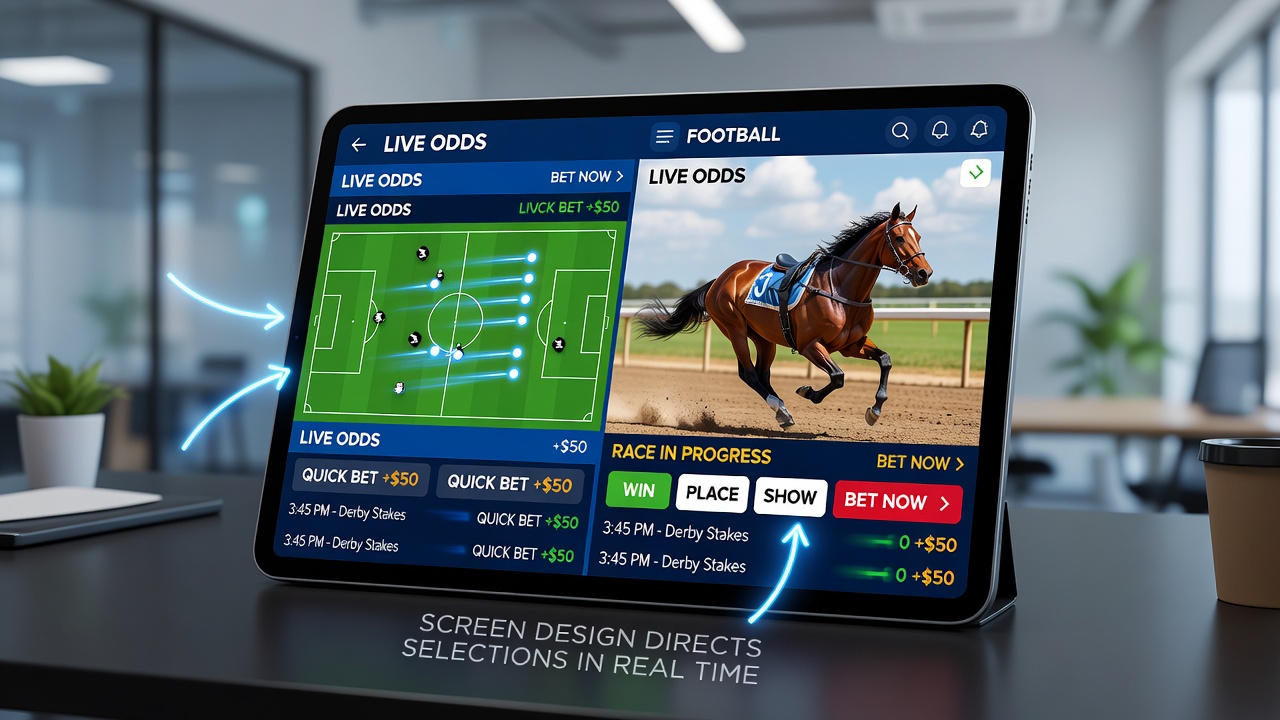
App developers arrange visual elements in specific patterns that guide selections during live football matches and thoroughbred races, and these arrangements draw from established principles of digital interface research. Data from multiple industry analyses show that button placement, color contrast, and scrolling feeds influence the speed and type of wagers users place while events unfold. Observers note that operators test these layouts extensively before rollout, adjusting spacing and prominence based on aggregated user interaction metrics collected across thousands of sessions.
Button Placement and Selection Speed
Primary action buttons occupy the lower third of screens in most real-time betting applications, a positioning that aligns with thumb-reach patterns documented in mobile usability studies. Researchers at several universities have measured how this layout reduces the steps between viewing updated odds and confirming a stake, particularly when football matches enter injury time or horses approach the final furlong. Secondary options such as cash-out functions appear in smaller, adjacent zones that still remain visible without additional scrolling, which encourages continued engagement rather than session termination.
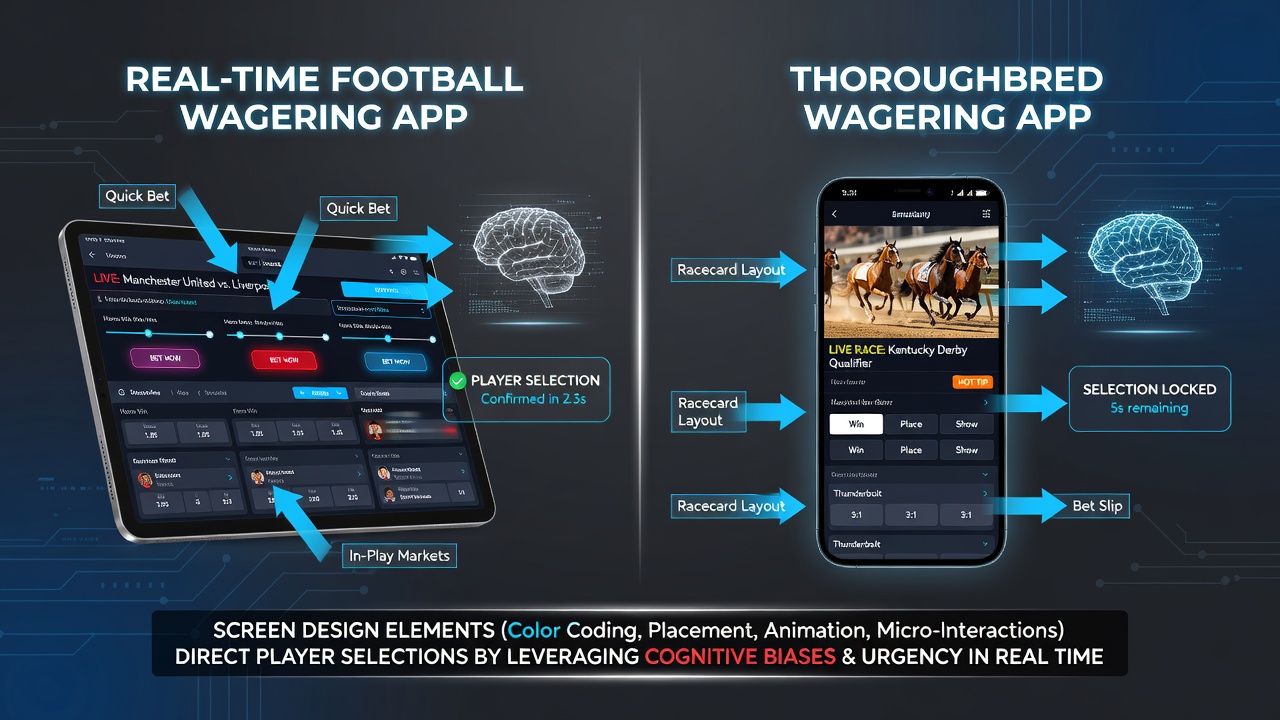
Design teams arrange these controls in vertical stacks for football apps, whereas thoroughbred platforms often use horizontal carousels to display multiple runners simultaneously. This difference reflects the distinct information loads of each sport, since football involves team statistics and live events while horse racing centers on individual form and track conditions. Figures from operator reports indicate that horizontal layouts correlate with higher multi-selection rates in racing environments.
Color Coding and Visual Cues
Green and amber tones dominate positive outcome indicators across both categories of apps, while red signals potential losses or declining odds. These choices follow conventions established in financial trading interfaces, yet they adapt to betting contexts where rapid decisions occur under time pressure. Eye-tracking experiments conducted by independent labs reveal that users fixate first on high-contrast elements, which operators leverage by increasing saturation on currently favorable selections.
Animated price changes appear as brief flashes or upward arrows in many interfaces, directing attention toward shifting markets during live play. In thoroughbred apps, these animations intensify as post time nears, whereas football platforms synchronize flashes with events such as corners or substitutions. The timing of these cues stems from A/B testing data that tracks click-through rates immediately following each visual trigger.
Real-Time Data Feeds and Scrolling Behavior
Live odds streams occupy the central portion of most screens, with continuous updates pushing older information upward in a scrolling motion. This arrangement keeps the most recent data at eye level while older selections recede, which aligns with documented patterns of user attention decay. During June 2026, several major platforms introduced variable-speed feeds that slow during critical moments, such as a horse entering the home straight or a football team mounting a late attack.
Additional panels display supplementary statistics like possession percentages or pace figures, positioned to the side of primary betting markets. Users who expand these panels encounter deeper metrics that can alter their next selection, yet the default collapsed view maintains focus on immediate wager options. Industry data collected through session recordings shows that expanded views increase average stake sizes by modest percentages when users remain engaged past the initial thirty seconds of interaction.
Comparative Approaches Across Sports
Football interfaces prioritize team-based accumulators and in-play goal markets, with navigation menus that surface related props once a user selects a match. Thoroughbred apps instead emphasize runner-specific data and exotic wager types, presenting these options through tabbed sections that update dynamically as fields narrow. Both approaches rely on predictive loading of likely next selections, which reduces latency and keeps users within the active flow of the event.
One study released by the University of Nevada Reno examined session logs from multiple operators and found measurable differences in selection diversity between the two sports. Football users tended toward simpler single-market bets under time constraints, while racing participants explored more combinations when presented with compact grid layouts. These patterns emerge consistently across different demographic groups, suggesting that screen architecture exerts influence beyond individual preference.
Regulatory Context and Design Standards
Authorities in various jurisdictions require clear disclosure of odds and stake amounts, which shapes how designers balance promotional elements with mandatory information. The Victorian Commission for Gambling and Liquor Regulation has issued guidelines that affect button sizing and confirmation steps in Australian apps, while similar frameworks appear in other regions. Operators incorporate these requirements into their layouts without sacrificing the directional cues that facilitate rapid selections.
Academic papers on digital decision-making further inform these standards, highlighting how default selections and pre-filled stake amounts steer outcomes. Data shared at industry conferences in early 2026 indicated that small adjustments to default values produce statistically significant shifts in average wager amounts across large user bases. Developers therefore calibrate these defaults carefully to meet both commercial targets and compliance obligations.
Conclusion
Screen design in real-time football and thoroughbred wagering apps operates through layered visual and interactive elements that direct attention and reduce friction during live events. Button placement, color application, scrolling feeds, and comparative layouts across sports all contribute to measurable patterns in user selections. Continued refinement of these interfaces draws on accumulating data from session analytics, regulatory requirements, and cross-disciplinary research, resulting in systems that respond dynamically to both event progression and user behavior.