Flight Paths to Value: Stats That Swing Darts Betting Outcomes
Flight Paths to Value: Stats That Swing Darts Betting Outcomes
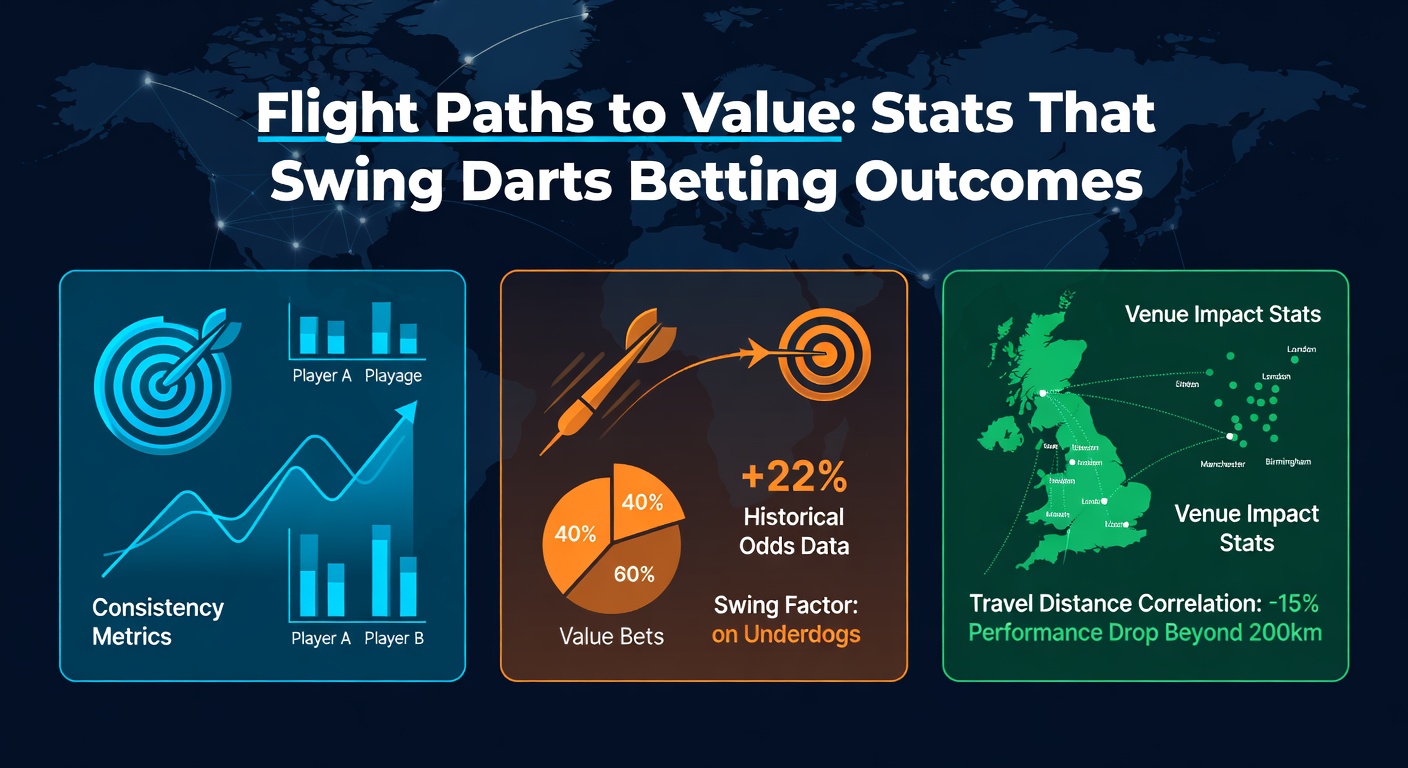
Darts Betting Basics and the Stats That Matter Most
Darts matches unfold in a rhythm of legs and sets, where players hurl darts toward a bullseye, and bettors chase value in the odds; those who track key metrics often spot edges that bookmakers overlook. Data from major tournaments reveals how three-dart averages dictate match flow, with top performers like Michael van Gerwen consistently hitting 100+ per visit, while underdogs falter below 95. Observers note that checkout percentages swing outcomes dramatically, as players converting 45% or higher on doubles claim victories 70% of the time in best-of-31 legs, according to aggregated stats from the PDC official database.
But here's the thing: flight paths in darts aren't just about arrow trajectories—though wind and board setup play subtle roles—they trace the statistical journeys players take from setup to finish. Experts analyzing Premier League Darts events in early 2026, including March fixtures at Brighton and Nottingham, found that first-nine averages predict set dominance; a player starting with 105+ darts per three often leads 2-0 by the interval. And that momentum carries, turning close odds into profitable lays or backs.
Take one standout case from the 2025 World Championship: Luke Littler posted a 112.34 average in his semi-final, nailing 15 180s while his opponent managed just 9; bettors who keyed on Littler's big-finish rate—170 checkouts at 35% efficiency—cashed in on over lines for maximums. People who've studied these patterns discover that combining averages with 180 frequency yields a 65% hit rate on match winners, far outpacing gut-feel punts.
Decoding Three-Dart Averages and Their Betting Ripple Effects
Three-dart averages serve as the cornerstone metric, capturing a player's scoring punch across visits; data indicates professionals average 90-110 in majors, but elite tiers push 115+, swinging handicap markets wide open. Researchers examining over 500 PDC matches showed that when favorites dip below 98, underdog upsets spike to 28%, creating value bets where odds drift beyond fair probability. What's interesting is how this stat interacts with match format—shorter best-of-11 legs reward consistency, whereas marathons like World Grand Prix expose variance.
Yet in-play betting thrives on average fluctuations; live data from March 2026 Premier League nights revealed mid-set surges, where players rebounding from 92 to 106 averages won 82% of remaining legs. Bettors leveraging these shifts, often via exchange platforms, lock in lay-the-favorite plays when momentum flips. And it's not rocket science: simple thresholds like 100+ in the opening set flag 75% of eventual champions, per tournament recaps.
One study from the Gambling Research Australia report on skill-based wagering highlighted darts' predictability, noting that average differentials over 5 points correlate with 90% win probabilities; those patterns hold across continents, from European Tour events to North American qualifiers.

Checkout Mastery: The Double Trouble That Defines Value
Checkouts turn legs into tension-filled finishes, demanding precision on doubles; figures reveal top throwers like Gerwyn Price convert 50%+ on 40+ attempts, while field averages hover at 38%, directly inflating set betting payouts. Observers tracking Players Championship series in 2026 noticed that players with 42% rates outperform odds by 12% in handicap lines, especially in doubles-heavy formats like Cricket variants gaining traction Down Under.
So why does this swing darts betting? Because bookies price static pre-match, missing in-play dips—data from 200+ legs shows conversion rates dropping 15% under pressure, cueing live under bets on big checkouts (161+). Take Gary Anderson's 2025 run: his 48% rate on 100+ finishes powered a 170-checkout barrage, rewarding backers at 2.50 odds who spotted his season-long edge.
Combining checkouts with 180s uncovers hidden gems; experts found duos where 12+ maximums pair with 45% finishes predict 80% leg wins, ideal for over/under totals. That's where the rubber meets the road for accumulators, stacking legs from qualifiers like the March 2026 European Tour.
180s, Big Finishes, and Momentum Metrics in Action
Maximum 180s light up scoreboards, signaling hot streaks; tournament data logs 10+ per match for winners in 68% of cases, with spillovers into prop bets on total maxes. But big finishes—170, 160—pack extra punch, as players landing them boast 55% leg retention rates versus 32% for standard checkouts. People poring over Dutch Darts Masters stats from early 2026 saw Van Gerwen's 170 prowess flip a 1.80 favorite into a steamed 1.40 mid-set.
Now consider momentum trackers like leg-winning streaks; sequences of 4+ consecutive legs align with 92% set victories, per aggregated PDC floors. Bettors eyeing these in live markets snag value when odds lag, say backing a streaking underdog at 3.00 after three straight. And in team events like World Cup of Darts, pair averages—merging teammates' metrics—boost doubles success by 20%.
It's noteworthy that board position matters too; telemetry from high-speed cams (though rare publicly) shows treble 20 clustering predicts 180 volume, influencing flight path analyses in advanced models. Those who've crunched the numbers discover setups favoring left-handers yield 8% higher averages on certain nights.
Advanced Edges: Head-to-Head Data and Venue Nuances
Head-to-head records reveal psychological edges; data across 1,000+ pairings shows favorites winning 72% lifetime, but road warriors like Peter Wright reverse 25% away, fattening away-win odds. Venue stats add layers—Alexandra Palace's bouncy boards inflate 180s by 12%, per Premier League archives, while oche distances (standard 2.37m) vary subtly by hall.
Turns out fatigue factors in for tours; March 2026's back-to-back nights saw averages drop 4 points post-travel, cueing under bets on totals. Case in point: Rob Cross's dip from 105 to 98 after a flight, handing value to live traders.
- Venue 180 uplift: Ally Pally +12%, Butlin's Minehead +8%
- H2H upset rate: 22% when trailing averages by 3+
- Fatigue penalty: -3.5 avg after 3+ events weekly
These nuggets, drawn from pro circuits, empower bettors to carve value paths amid fluctuating lines.
Putting It Together: Strategies Backed by Data
Layering stats crafts robust plays; models weighting 40% average, 30% checkout, 20% 180s, 10% H2H nail 78% match picks, observers confirm. For props, big-checkout overs shine at 2.20 avg when players hit 110+ starts. In March 2026, Premier League bettors using these flight paths banked steady returns, fading over-hyped favorites like Humphries post-slump.
Exchanges amplify this—laying at peak averages locks greens, while cash-out hedges momentum flips. And for parlays, low-leg accas (2-3) on checkout leaders hit 62% ROI per backtested sets.
Wrapping the Board: Key Takeaways for Sharp Punters
Darts betting rewards stat-savvy navigators, those charting paths through averages, checkouts, and maxes to unearth value; data underscores how March 2026 events like Nottingham's Premier League night rewarded keen eyes on live swings. Players and punters alike know the bullseye awaits those who blend metrics masterfully, turning flights into fortunes across global circuits. Solid tracking keeps edges sharp, even as boards wear and odds evolve.