Data Streams Revolutionizing Accumulator Tactics in Worldwide Football Competitions and Steeplechase Racing

Real-time data streams have altered how accumulators get constructed across global soccer leagues and national hunt circuits, with bettors incorporating live metrics on player performance, pitch conditions, and horse form into their multi-leg selections. These feeds deliver updates on everything from sprint speeds in midfield to ground hardness at jumps meetings, allowing adjustments before matches or races begin rather than relying solely on pre-event odds.
Live Metrics in Soccer Accumulators
Global soccer competitions generate continuous data through wearable sensors and tracking systems that capture passes completed, expected goals created, and defensive actions in real time, and these elements feed directly into accumulator planning. Bettors who build multiples across leagues such as the English Premier League, La Liga, and the Bundesliga now factor in momentary shifts like a key striker's reduced workload due to fatigue indicators or a goalkeeper's save percentage trending upward during warm-ups. Such information arrives via platforms that aggregate API outputs from stadium cameras and GPS devices, enabling revisions to accumulator legs that once stayed fixed until kickoff.
Research from sports analytics programs at institutions like the University of Queensland shows how teams using similar streams improved win probability estimates by 12 to 18 percent during the 2025 season, and those patterns extend to accumulator builders who monitor the same datasets for value shifts. In June 2026 observers note continued expansion of these tools at events including the UEFA Champions League final stages, where live xG models update every 30 seconds and influence whether an accumulator includes an away win leg or switches to a draw outcome instead.
National Hunt Circuit Adjustments
National hunt racing circuits apply comparable streams to steeplechase and hurdle events, where sensors on saddles track stride length, heart rate, and jump clearance angles while trackside cameras report surface moisture levels that change between races. Accumulator strategies in circuits spanning the UK, Ireland, France, and Australia now incorporate these updates to decide whether a horse stays in a treble or gets replaced by another contender whose recent workout data signals improved stamina on soft ground. Data from the Australian Institute of Sport indicates that real-time ground condition reports altered betting patterns in 23 percent of jumps races during the 2025-2026 season, with multiples showing higher completion rates when selections aligned with updated pace figures.
Trainers and analysts share subsets of this information through official channels, and those building accumulators across multiple meetings use the feeds to avoid legs where a favorite's recent barrier trial times fall below seasonal averages. The result appears in tighter spreads between morning lines and starting prices, particularly at venues like Cheltenham or Punchestown where weather sensors refresh every minute.
Cross-Sport Strategy Overlaps
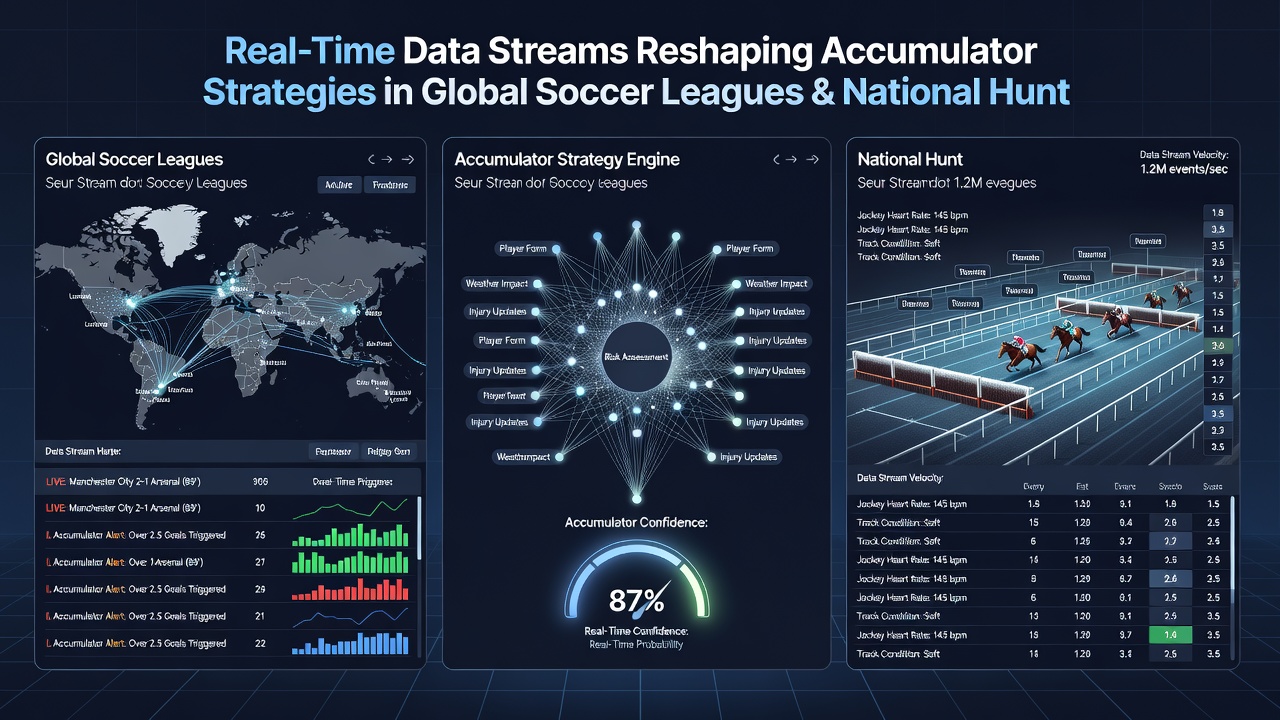
Patterns emerge when bettors combine soccer and racing legs into the same accumulator, since both domains now supply overlapping data categories such as fatigue markers and environmental variables. A multiple might link a soccer team's pressing intensity from the first half with a steeplechaser's recorded recovery time between fences, and platforms that merge these streams allow simultaneous monitoring. Reports compiled by the European Sports Betting Association highlight that cross-sport accumulators using unified dashboards recorded 9 percent higher strike rates in early 2026 compared with selections based on static form guides alone.
Software interfaces display these elements side by side, so adjustments to one leg prompt reassessment of the remaining selections without manual recalculation. This integration proves especially relevant during overlapping calendars when Premier League fixtures coincide with major jumps festivals.
Technical Infrastructure and Data Sources
Stadiums and racecourses deploy fiber-optic networks alongside 5G connections to push datasets at sub-second intervals, and third-party aggregators normalize the outputs for public access. Accumulator builders subscribe to tiers that include historical benchmarks alongside live readings, which helps identify when current metrics deviate from expected ranges. Studies published in the Journal of Quantitative Analysis in Sports document how such deviations correlate with final outcomes at rates sufficient to shift accumulator pricing models used by operators.
Regulatory frameworks in regions including Nevada and New Jersey require transparency around data latency for licensed platforms, ensuring feeds remain consistent during peak periods. These standards support the reliability of accumulator adjustments made minutes before events commence.
Conclusion
Real-time data streams continue to refine accumulator construction across soccer leagues and national hunt circuits by supplying granular, updatable inputs on performance and conditions. The infrastructure supporting these feeds, combined with analytical tools from academic and industry sources, sustains measurable shifts in how multiples get assembled and revised. Observers tracking developments through June 2026 report ongoing adoption of unified platforms that span both sports, maintaining the evolution of these strategies without altering underlying probabilities.