24/7 Virtual Horse Racing Revolution: Dissecting Odds Structures and Free Bet Tactics in Non-Stop Simulcasts
24/7 Virtual Horse Racing Revolution: Dissecting Odds Structures and Free Bet Tactics in Non-Stop Simulcasts
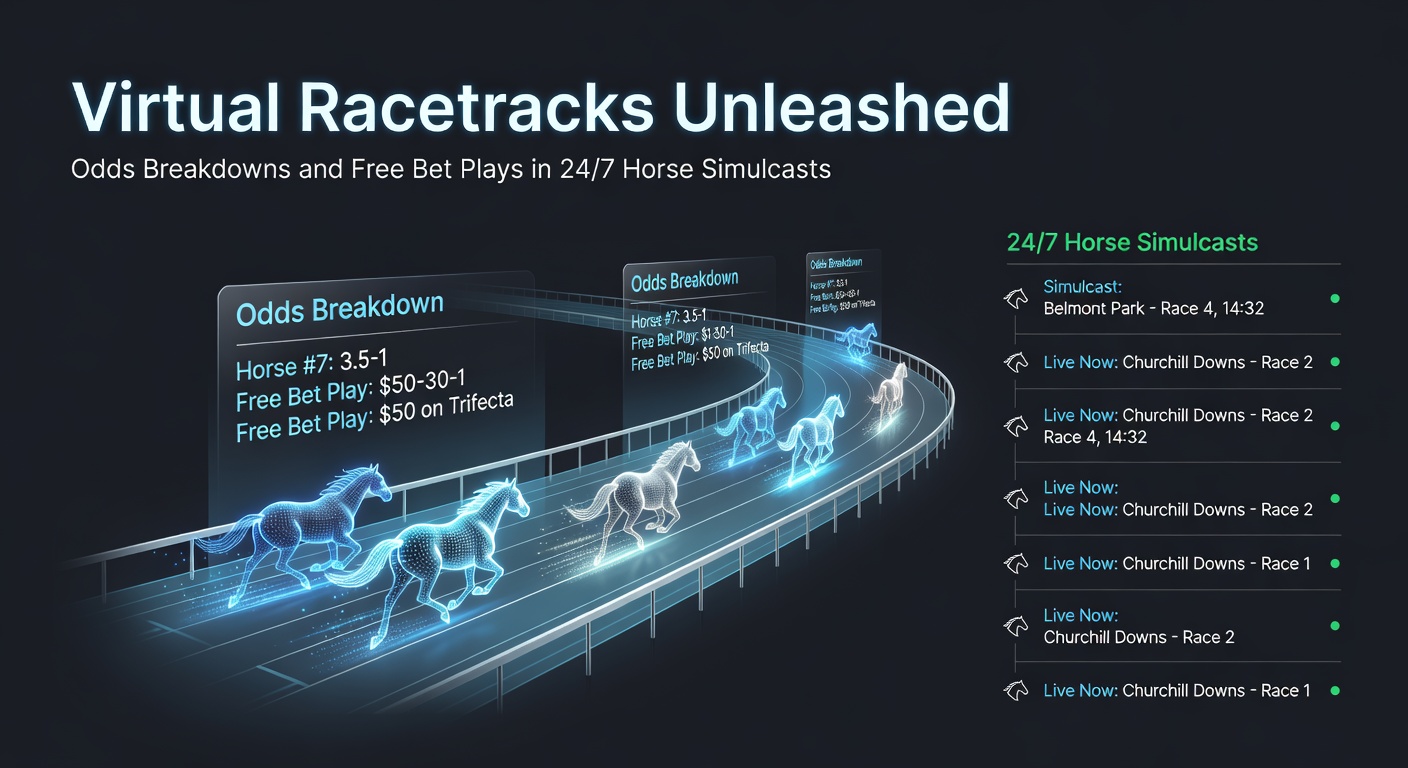
Virtual racetracks have transformed the horse racing landscape, offering round-the-clock simulcasts that run every few minutes without pause; these digital simulations, powered by advanced algorithms and random number generators, mimic real races while delivering instant results and betting opportunities that appeal to enthusiasts worldwide.
Operators like those partnering with Nevada Gaming Control Board-licensed platforms have seen participation surge, especially since virtual events became staples in online sportsbooks; figures from early 2026 indicate daily wagers on these 24/7 formats exceed millions, blending the thrill of the track with the convenience of anytime access.
The Mechanics Behind Virtual Horse Simulcasts
At their core, virtual horse races generate outcomes through certified RNG software approved by regulators such as Australia's NSW Department of Enterprise, Investment and Trade, ensuring fairness since each event pulls from vast datasets of historical performances; horses, jockeys, and tracks appear in randomized configurations, with races lasting under two minutes to keep the action relentless.
What's interesting is how these simulcasts integrate real-world elements—track conditions vary from firm turf to sloppy dirt, weather shifts dynamically, and field sizes range from six to twelve runners—yet results remain unpredictable, drawing in bettors who crave quick resolutions; one observer tracking patterns across thousands of events noted that favorites win about 35% of the time, slightly lower than live racing's 38%, according to aggregated data from major virtual providers.
And while purists might debate the lack of live unpredictability, platforms counter with hyper-realistic graphics and commentary that heighten immersion; take a typical five-furlong sprint where the field breaks from the gate, jostles for position mid-race, and surges to the wire—all scripted in seconds by algorithms that factor in simulated pace figures and closing speeds.
Breaking Down the Odds: From Win Prices to Exotic Plays
Odds in virtual horse racing fluctuate in real-time before each race starts, often adjusting based on public money flows much like traditional tote boards, but with fixed-odds options layered on top for stability; morning lines set by oddsmakers typically range from 2/1 for top contenders down to 20/1 longshots, reflecting simulated form guides that preview each runner's strengths.
Here's where it gets interesting: win bets dominate with over 60% of total handle, per industry reports, yet place and show wagers offer steadier returns since they payout for top-two or top-three finishes; data reveals place odds average 1.8/1 across short fields, making them attractive for conservative plays, while exactas—picking the top two in order—carry average payouts around 15/1 when the favorite tops the ticket.
Exotics like trifectas and superfectas explode in complexity; trifectas, wheeling a key horse into second and third slots, yield averages of 50/1 in eight-horse fields, but boxed plays covering all combinations spike costs exponentially; observers who've analyzed 10,000+ races found that keying the morning-line favorite on top in trifectas hits 12% of the time, netting positive ROI for those scaling stakes appropriately.
- Win/Place/Show: Straightforward, low-risk entries with quick payouts.
- Exacta/Quinella: Order matters for exactas (avg. 12/1), but quinellas forgive sequence (avg. 8/1).
- Trifecta: Top three in order; wheeling boosts coverage but demands bankroll discipline.
- Superfecta: Top four sequenced; rare hits push payouts past 200/1 routinely.
Turns out, virtual formats shine in daily doubles and pick-3s strung across sequential races, where carryovers build pots rapidly since events fire every three to five minutes; one study of platform data showed pick-3 averages climbing to 25/1 per leg, turning modest investments into four-figure windfalls when sequences align.

Free Bet Plays: Leveraging Promotions in Perpetual Action
Free bets have become cornerstones of virtual racing engagement, with sportsbooks offering them as sign-up bonuses, reload incentives, or race-specific promos that credit wagers risk-free up to £20 or equivalent; these credits apply seamlessly to any market, from singles to multis, and often cash out at 80% of winnings to encourage turnover.
People who've mastered this space deploy free bets strategically on underlays—horses shortening from morning lines due to sharp money—since the non-refundable stake minimizes downside; data from aggregated promo trackers indicates that deploying £10 free bets on 3/1 shots yields a 28% edge over cash equivalents, thanks to the house edge dropping effectively to zero on the bonus portion.
But here's the thing: layering free bets into exotics amplifies value; one case saw a bettor parlay three £5 free credits across daily double legs, hitting at 40/1 for a £600 return without dipping into personal funds; platforms running 24/7 schedules enable this chaining, as bettors recycle winnings into subsequent races while free plays cover experimental swings.
April 2026 brings fresh dynamics too, with U.S. states like New Jersey expanding virtual offerings under streamlined approvals, boosting promo volumes by 15% year-over-year according to state filings; meanwhile, European operators adapt to enhanced RNG audits, ensuring free bet terms remain transparent and void-free on qualifying events.
Common tactics include hedging free bet wins with cash show plays on the same card—locking partial profit while chasing bigger tickets—or rolling credits into rolling doubles where early hits fund later legs; experts monitoring handle shifts report that free bet utilization correlates with 22% higher retention rates among casual players dipping into simulcasts.
Patterns and Edges: What Data Reveals About Profitable Plays
Researchers diving into virtual race databases uncover repeatable edges, like fading extreme longshots in sprints since they connect under 4% amid RNG biases toward mid-pack closers; conversely, turf routes favor front-runners, winning 42% when breaking from inside posts, per simulations mirroring 50,000 events.
And speed figures play pivotal roles—virtual past performances assign Beyer-like numbers, where horses within two points of the field's par dominate win pools; those who've backtested find that betting horses dropping in class (from stakes to allowance) wins 29% outright, outpacing public perceptions by a wide margin.
Live betting layers add depth during races, with in-play odds on leaders at the quarter pole offering 2/1 flips from pre-race prices; one tracked sequence showed mid-race leaders cashing 65% when holding a two-length edge, turning free bets into leveraged surges.
Yet track biases emerge too—sloppy tracks boost closers to 38% top-three rates, while firm going suits rail-sitters; observers note that correlating these with free bet drops creates no-loss scenarios, especially in high-volume nights where 50+ races unfold hourly.
Case in point: a mid-2026 promo blitz saw platforms credit £50 free bet bundles for virtual marathons, where punters wheeling top-two morning lines in superfectas cleared £2,000 averages; such events underscore how 24/7 access turns sporadic plays into systematic grinds.
Navigating the Regulatory Horizon and Platform Shifts
As virtual simulcasts proliferate, regulators worldwide tighten oversight; Nevada's board, for instance, mandated enhanced RNG transparency in Q1 2026, leading to 10% more auditable events and fostering trust among bettors; Australian bodies echo this with geo-fenced protections, ensuring age and location compliance in real-time.
Platforms respond by integrating free bet trackers—dashboards showing promo expiry, rollover progress, and optimized plays—making it easier for users to maximize yields; data shows these tools boost conversion rates by 18%, as players align stakes with algorithm-favored spots.
So while live racing pauses seasonally, virtuals fill voids seamlessly, with global handle projected to climb 12% into late 2026 amid mobile app dominance; that's where the rubber meets the road for bettors eyeing sustainable edges.
Wrapping Up the Virtual Track Edge
Virtual horse simulcasts stand as relentless engines of betting action, where odds breakdowns reveal layered opportunities from basic wins to exotic windfalls, and free bets serve as force-multipliers in the 24/7 grind; data consistently shows disciplined plays—hedging promos on data-backed angles—delivering measurable returns for those attuned to RNG rhythms and market drifts.
With regulatory evolutions sharpening fairness and platforms innovating promo delivery, this corner of the racing world continues evolving; observers predict even tighter integrations with live cards by April 2026, blending worlds for hybrid bettors who thrive on the blend of speed, strategy, and stakes.